
Why a Bot Joining Your Client Call Is a Mistake You Cannot Undo
Partway through a call with a client I did not know well yet, a new participant appeared in the list. It had a friendly name and a small icon and it belonged to none of us. One of the people on my side had connected a note taking assistant, and it had quietly joined the call as its own attendee. The client noticed before I did. There was a short pause, and then the question I still remember. Who is that in the call with us.
It was a reasonable thing to ask, and there was no reasonable answer that made the moment smaller. I explained it was a transcription tool. The client nodded and we moved on, but something had shifted. For the rest of the call people were a little more careful about what they said. A stranger had been added to a private conversation, and everyone adjusted to being recorded by something they had not agreed to. Nothing was broken exactly. But a trust I had been building for weeks took a small, avoidable hit that I could not take back.
This post is about that moment and what it should teach anyone who records client meetings. The obvious lesson is to capture meetings without putting a bot in the room. The less obvious and more important lesson is that not joining as a bot is only where the real difference starts.
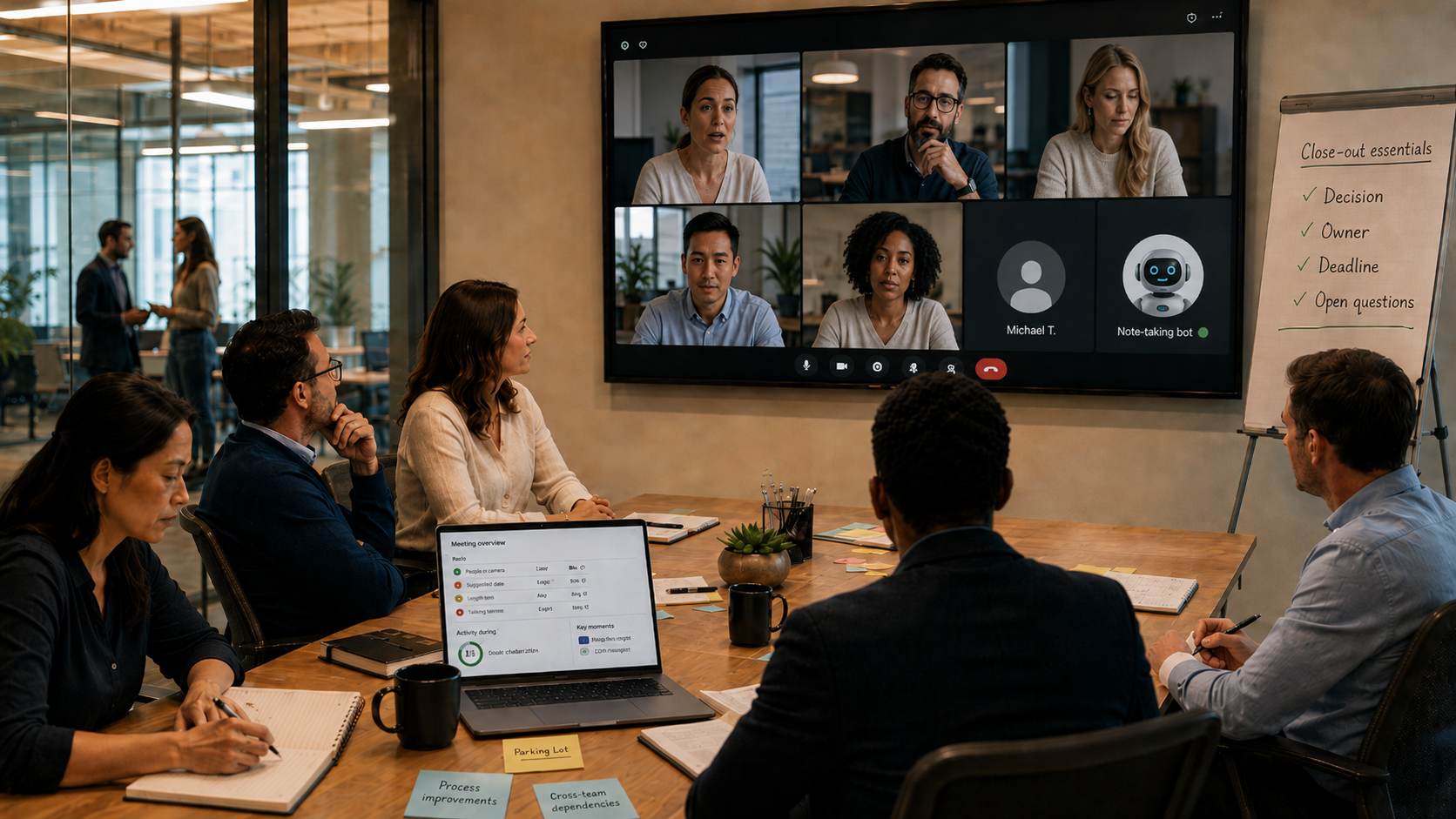
Why AI meeting transcription without a bot matters more in a client call
Inside your own company, a bot joining the call is mostly a curiosity. Everyone works there, everyone has seen it before, and the awkwardness is minor. In a client call, an agency call, or any meeting with people outside your organization, the same bot reads completely differently. It is an unfamiliar third party added to a conversation the other side considers private. It changes how candid people are willing to be, and it puts you in the position of explaining a surveillance tool at the exact moment you are trying to build a relationship.
There is a quieter cost too. When a bot is a visible participant, you have implicitly told the other side that recording is a thing that happens to them rather than something you handle transparently. Even when everyone consents, the optics of a stranger in the room work against you. The most valuable conversations, the ones where a client tells you what is really going on, are exactly the ones a bot in the participant list makes less likely.
How recording a meeting without a bot actually works
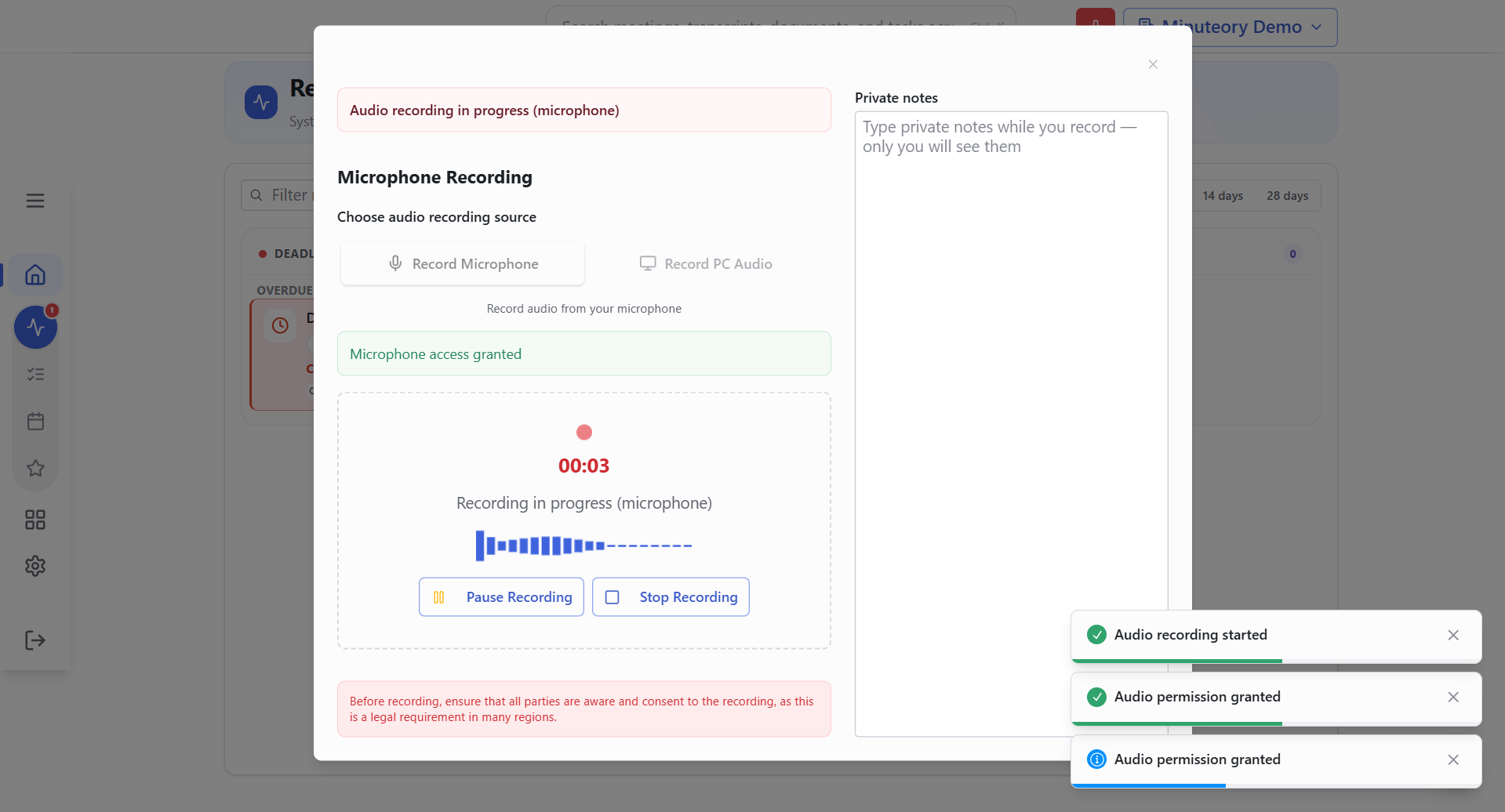
Minuteory does not join the call as a bot. No Minuteory participant is added to the meeting. Instead it captures the audio of the conference tab in your own browser, so to everyone else on the call you simply appear as yourself. There is no extra attendee to explain and no unfamiliar name in the list. You can also record audio directly in the browser from your microphone or system audio, upload a recording after the fact, or pull a file straight from your connected Google Drive. Three ways in, none of which require a bot to sit in the meeting.
This is deliberately not a way to record people secretly. Before every meeting is processed, there is a consent confirmation step, and the honest framing is that you appear as yourself and it remains your responsibility to tell participants they are being recorded, which in many places is a legal requirement. The point is not to hide the recording. The point is that being transparent with a client should not require introducing a stranger into their call. You can be fully above board and still be the only party they recognize on the screen.
Why not joining as a bot is only the starting line
Here is the part most of the bot free conversation misses. Capturing a meeting without a bot is quickly becoming table stakes. More tools can do it every month, and on its own it is no longer a real advantage. If all you get from avoiding a bot is a cleaner transcript, you have removed an awkwardness and gained nothing else.
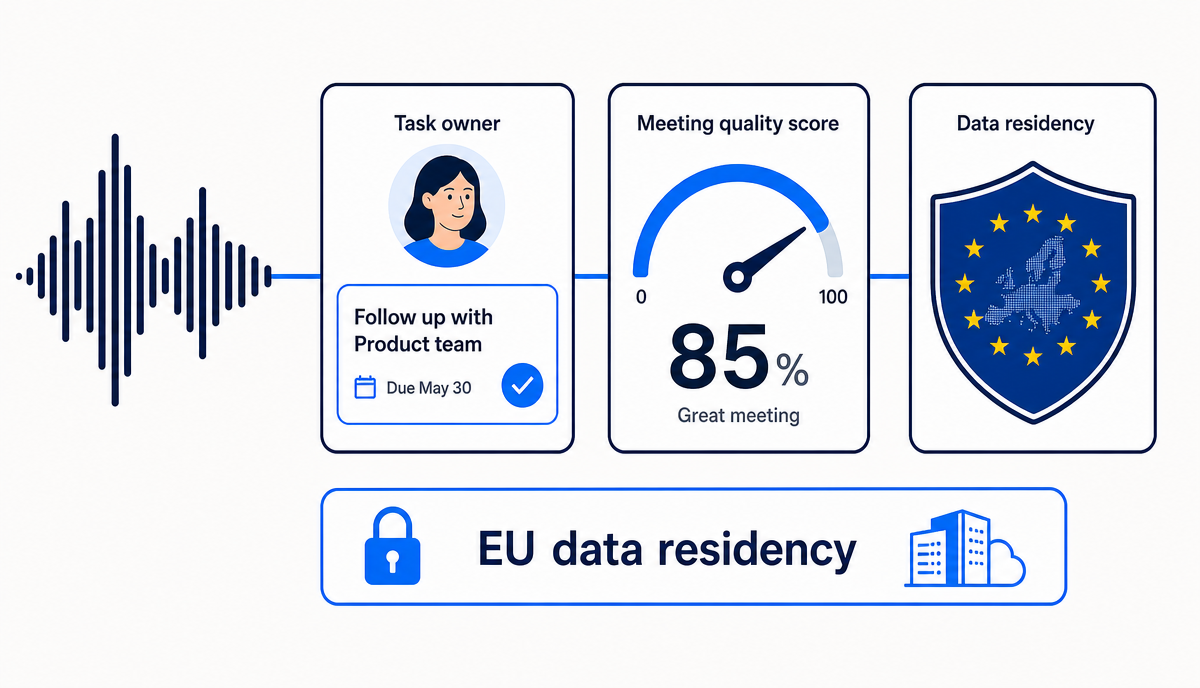
What actually separates one approach from another is what happens after the audio is captured. This is where the combination matters. The same meeting that was recorded without a bot then produces tasks with named owners and RACI roles, so accountability leaves the room attached to specific people. It is scored across six dimensions, so you can see whether the meeting worked, not just what was said. If you run meetings for several clients, each one lives in its own independent organization. And the processing happens under European data residency, which is covered in detail in how European data residency works for meeting data, so where the meeting data lives is a question you can answer cleanly. No single competitor combines all of that. Plenty can skip the bot. Almost none turn a bot free recording into owned accountability, measured quality, client separation, and data you can stand behind.
It is worth being precise about why the combination is the moat rather than any single feature. Any one of these can be copied. A competitor can drop the bot, or bolt on a task list, or promise European hosting on a pricing page. What is hard to copy is all of them working as one flow, so that a recording captured without a stranger in the room becomes owned accountability, a measured quality score, clean client separation, and properly located data in a single pass. Features are easy to match one at a time. A system that does all of it at once, from a call nobody outside the room had to be introduced to, is not.
That is the real reason not to put a bot in your client call. Not only because the bot is awkward, but because avoiding it is the entry point to a stack that treats the recording as the beginning of accountability rather than the end of note taking.
A test you can run on your next external meeting
Before your next call with someone outside your company, look at how you currently capture it. Ask one question. Would the other side see anything in the participant list that they did not personally invite. If the answer is yes, you are paying a small trust tax on every external conversation, whether or not anyone says so out loud. Then ask the second question. Once the call is captured, does anything actually happen with it, or does it become another transcript nobody owns. Most setups fail one of those two questions. The good ones pass both.
The reason both questions matter is that they are the same question asked at two ends of the meeting. Who is in the room you did not invite, and who owns the work when the room empties. A bot gets the first one wrong. A plain transcript gets the second one wrong. Getting both right is the whole point.
Where trust and accountability meet
A client call is worth protecting at both ends, the moment it is recorded and the moment it turns into work. If you want to capture meetings without a stranger in the room and turn them into owned, measured, and properly located records, you can try it on your next call at app.minuteory.com.